
The Mint Files
An ongoing investigation by Freedom Shapes
Uncovering hidden insights about a hallucinogenic mint named Salvia divinorum, and its connection to unexplained phenomena, consciousness, and human potential.
What Are The Mint Files?

The Mint Files is a public investigation by Freedom Shapes into how U.S. federal agencies have studied, regulated, and responded to Salvia divinorum, a powerful psychoactive plant in the mint family.
This project focuses on whether government agencies have documented or studied the effects of Salvia. The investigation seeks to uncover what these agencies have noted about the phenomenon of recurring archetypes reported in Salvia divinorum experiences. I aim to discover any documentation of federal interest in salvia divinorum which has not yet made public, but my investigation is most pointed towards finding research conducted by federal intelligence institutions on salvia divinorum and its potential to produce psycho-archetypal phenomenology. I suspect that such findings could reflect deeper shifts in how the public should think about human consciousness, evolution, and perhaps even the metaphysics of reality.
Who We’re Asking
Through the Freedom of Information Act (FOIA), we’ve submitted formal requests to the following U.S. agencies:
- Drug Enforcement Administration (DEA)
- Central Intelligence Agency (CIA)
- Federal Bureau of Investigation (FBI)
- Department of Defense (DoD)
- Defense Intelligence Agency (DIA)
- DARPA
- USDA & U.S. Forest Service
- Food and Drug Administration (FDA)
- Customs and Border Protection (CBP)
- National Institutes of Health (NIH)
- National Security Agency (NSA)
Why Salvia Matters
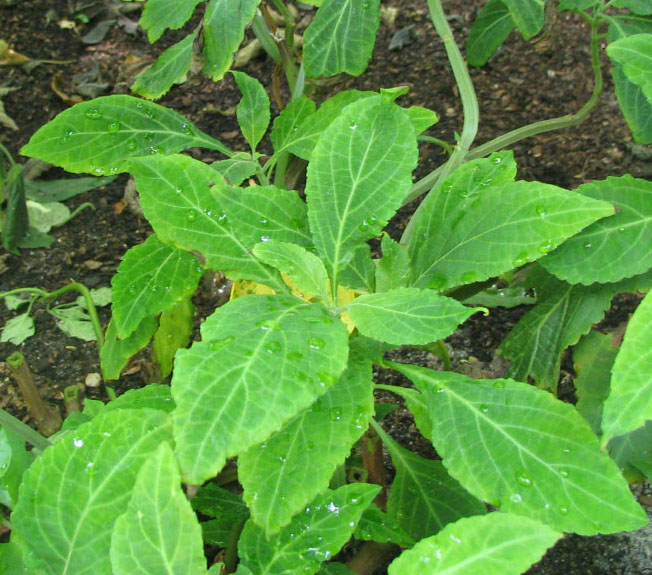
Salvia divinorum, a rare psychoactive member of the mint family, is the most potent and least scheduled naturally occurring plant hallucinogen known to science, and yet, it remains the least researched and developed among natural plant hallucinogens, despite its unique properties and general accessibility.
The active ingredient of Salvia divinorum called Salvinorin A, is a highly selective kappa-opioid receptor agonist, with no affinity for serotonin 5-HT2A receptors, unlike DMT, LSD, psilocybin and mescaline. The unique molecular structure of Salvinorin A has completely uprooted our understanding of how hallucinogens work on the brain. Before Salvia divinorum was studied, it was widely thought that all hallucinogens worked primarily through serotonin receptors, specifically, the 5-HT2A receptor.
Due to its unique mechanism and the versatility of its chemical structure, Salvinorin A and its potential for analogues could represent a paradigm shift in neuropharmacology. This includes promising applications in non-addictive pain management, addiction treatment, and the modulation of mood related neural circuits in depression, all without relying on or depleting serotonin or dopamine receptor systems.
Perhaps most intriguing, is the effects of Salvia divinorum, which often transport individuals to archetypal landscapes. These village-like visions which users often refer to as “Salvia Land” are cartoonish villages and factories inhabited by short-statured humanoid entities resembling “little people” “elves” or “dwarves”. I refer to these figures as G.N.O.M.E.S. (Globally Noticed Order of a Mystical Elflike Species). The recurring archetype of G.N.O.M.E.S while using Salvia raises profound metaphysical and evolutionary questions. Are these encounters manifestations of some sort of Jungian collective unconscious rooted deeply into the human evolutionary superstructure, or perhaps something that transcends our evolution all together? Could the archetypes be echoes of ancient artifacts of human cognition? The cross-cultural consistency of these visions suggests they may arise from a shared evolutionary architecture, or an evolutionary inheritance carved into the walls of the psyche itself, possibly serving adaptive functions in early human ritual, healing, or moral development. Rather than being random hallucinations based on the subjectivity of one’s own mind, such experiences may represent access to a hidden substratum of consciousness, an archetypal layer beyond the subjective mind that shaped, and continues to shape, the human experience.
In addition to its notable medicinal potential, and implications on consciousness and human evolution, Salvia divinorum possesses a mysterious and poorly understood pollination ecology. Long believed to be endemic solely to the Sierra Mazatec region of Oaxaca, Mexico, a recently documented wild population in Veracruz suggests the possibility of previously unobserved or rare pollination events. This discovery raises new questions about the plant’s ecological adaptability, genetic diversity, and potential for undiscovered habitats.
All of this and still, Salvia divinorum remains largely absent from public and academic discourse, despite its unique pharmacological and anthropological significance. Given the scarcity of accessible information, it is my mission to uncover and document as much as possible. I hope that new insights generated through FOIA requests will make a meaningful contribution to the broader conversation. It is the goal of The Mint Files to spark a renewed scientific interest and investigative inquiry into this extraordinary mint.
The Mint Files is an independent investigation into the extent to which Salvia divinorum may have been studied and surveilled by federal agencies. My research extends beyond the plant’s legal status and ecological history into its potential role in shaping human consciousness. I believe Salvia divinorum may represent an important, yet overlooked, tool for our evolving understanding of mind and possibly even the future trajectory of human evolution itself.
FOIA Status Tracker
Document Drops
- Currently Pending
How You Can Help
- Have documents? Send them to: freedomshapes@gmail.com
- Want updates? Subscribe to Freedom Shapes.
- Support the investigation: Share this page and cite Freedom Shapes.
 freedomshapes.com